
Understanding HA, HV, and LV: What UK Businesses Need to Know
Whether you run a small office, a large factory, or a critical facility like a data centre, understanding how electricity is supplied and categorised can help you manage costs, reliability, and future planning. In the UK, businesses typically deal with three levels of energy supply: HA (High/Heavy Demand), HV (High Voltage), and LV (Low Voltage). In this guide, we explain what each means, give real-world examples, and highlight why specialist knowledge matters.
1. HA - High/Heavy Demand Energy Supply
What it is:
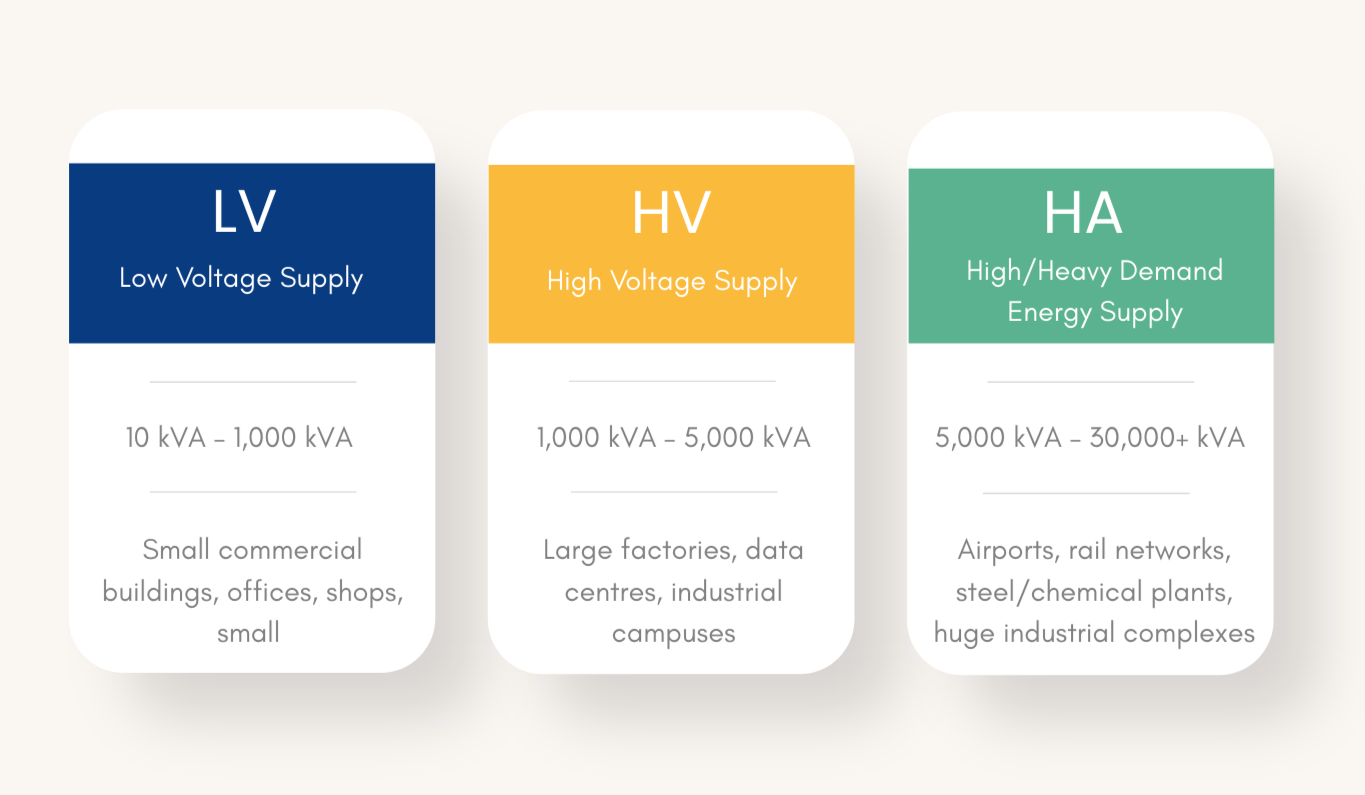
HA refers to sites with extremely high electricity demand, often tens of megawatts, requiring dedicated infrastructure and sometimes multiple feeders from the grid.
Why it matters:
Only suitable for very large facilities that need continuous, reliable power.
Requires bespoke engineering, transformers, and specialist management.
Examples:
Airports powering terminals, runways, and airside operations.
Rail networks, particularly electrified lines.
Large industrial complexes like steel plants or chemical works.
2. HV - High Voltage Supply
What it is:
High Voltage (HV) electricity typically ranges from 11kV to 66kV and is used by large commercial or industrial facilities.
Why it matters:
Efficient for transmitting power over long distances to high-demand sites.
Requires specialist knowledge for connection, safety, and optimisation.
Examples:
Large factories and manufacturing plants.
Data centres.
Industrial campuses or warehouses with high energy requirements.
Client Success Story:
By taking a close look at one client’s current and projected energy usage, and applying our in-depth knowledge of both high-voltage (HV) and low-voltage (LV) supply structures, we were able to identify significant inefficiencies and opportunities for optimisation. As a result, we helped the client reduce their energy costs by £500,000, while ensuring their supply strategy is aligned with future growth. This is a great example of how understanding the nuances of commercial energy and proactively managing usage can deliver substantial savings.
3. LV - Low Voltage Supply
What it is:
Low Voltage (LV) electricity is typically 230/400V, powering offices, shops, and smaller industrial facilities.
Why it matters:
Most common type of supply for businesses.
Easier to manage, but businesses can still save by monitoring usage and choosing the right tariffs.
Examples:
Offices, retail stores, small warehouses.
Sites with standard commercial equipment and lighting.
Why Understanding HA, HV, and LV Matters
Ensures your business has the right supply for your needs, avoiding overpayment or under-capacity.
Helps you plan for future growth, new machinery, or energy efficiency projects.
Expert guidance can lead to significant cost savings, reduced downtime, and better sustainability outcomes.
Next Steps: Expert Guidance for Your Business Energy
Whether your business operates at HV, or LV levels, understanding your energy supply and usage is the first step to controlling costs and improving reliability.
Our team of energy consultants provides in-depth expertise across supply types, helping UK businesses make smarter energy decisions.
Contact us today to discuss how we can optimise your energy strategy.